
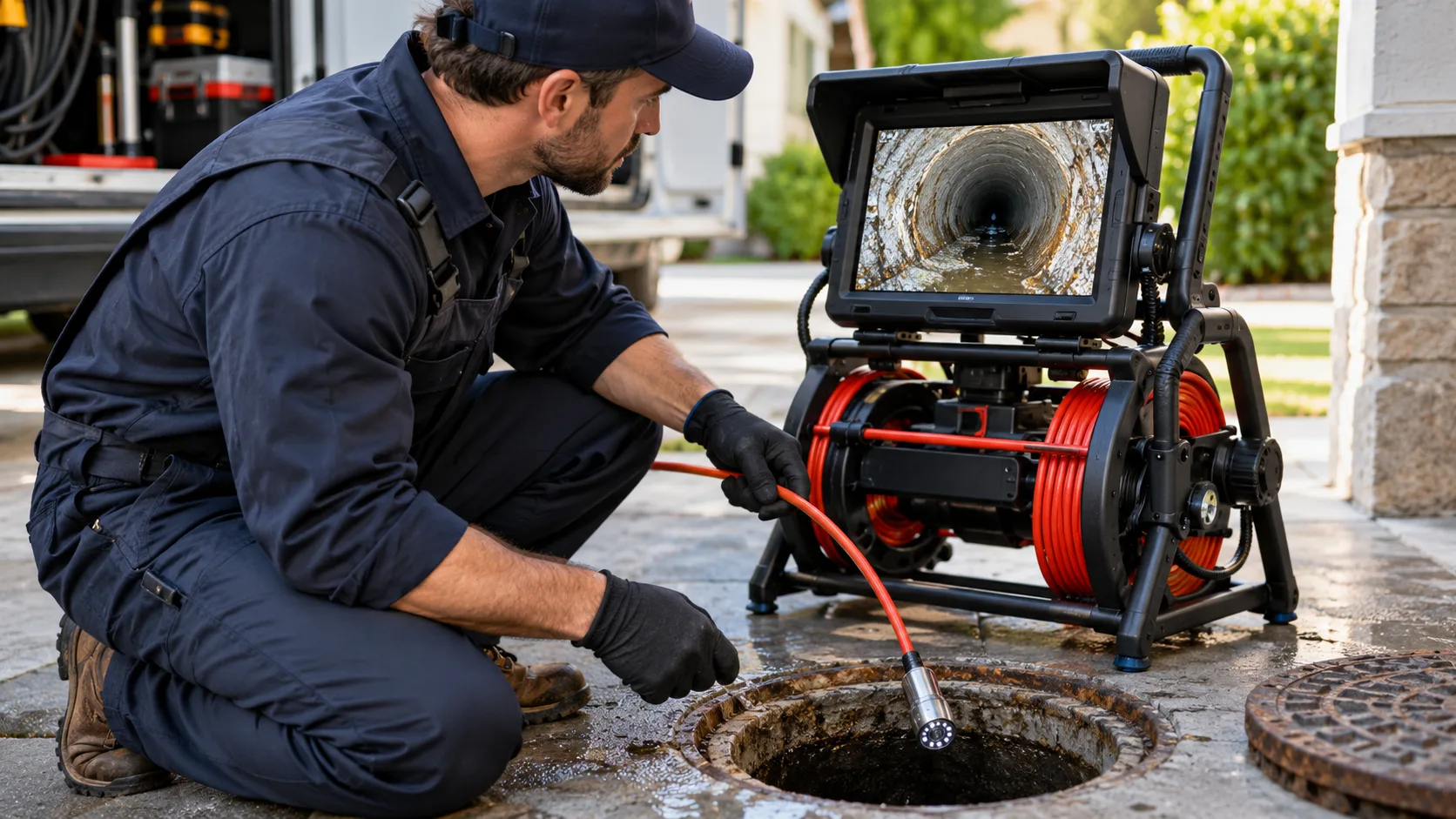
A sewer inspection camera is a useful plumbing tool that allows professionals to examine the inside of underground sewer lines, drains, and pipes without unnecessary digging. Hidden plumbing problems can cause recurring blockages, unpleasant odors, slow drainage, and expensive property damage. By providing a direct view inside the pipe, camera inspections help identify possible problems and support more informed repair decisions.
Understanding how a sewer inspection camera works can help homeowners recognize when professional pipe inspections may be worthwhile. These specialized cameras can reveal blockages, cracks, tree root intrusion, corrosion, and other drainage issues that are difficult to diagnose from the surface. This guide explains their main uses, practical benefits, important features, and limitations, along with what to expect during an inspection.
What Is a Sewer Inspection Camera?
A sewer inspection camera is a specialized device designed to capture images and video from inside drainage pipes and sewer systems. It generally consists of a small waterproof camera head attached to a flexible cable or push rod. The camera sends live footage to a connected monitor, allowing plumbing professionals to examine the condition of hidden pipe interiors.
Modern pipe inspection cameras often include built-in LED lighting to illuminate areas that would otherwise be completely dark. Some systems provide recording functions, distance counters, and electronic locating capabilities. These additional features help technicians document what they see and estimate where particular defects may be located within a plumbing network.
Sewer cameras are commonly used in residential buildings, commercial properties, and municipal drainage systems. They can inspect suitable sewer laterals, underground drains, and some larger pipelines, depending on the equipment selected. Because pipe sizes and access conditions vary, professionals choose different camera systems to match the inspection requirements of each property.
How Does a Sewer Inspection Camera Work?
A sewer camera inspection usually begins when a trained technician identifies a suitable access point, such as an existing cleanout. The camera head is guided into the pipe using a flexible push cable or another compatible mechanism. As the camera moves through the drainage system, its built-in lights illuminate the interior and transmit images to the display.
The technician studies the video footage to identify visible abnormalities, including accumulated debris, broken joints, standing water, or signs of pipe deterioration. Many cameras can record the inspection for later review, making it easier to explain findings to property owners. However, interpreting these images correctly requires knowledge of pipe materials, drainage layouts, and common defects.
Some advanced inspection systems also include transmitters that work with compatible locating equipment above ground. This technology can help professionals estimate the position and depth of a camera head inside a buried pipe. Although these measurements may improve repair planning, their accuracy depends on site conditions, equipment calibration, and the technician’s experience.
Common Uses of Sewer Inspection Cameras
One of the main uses of a sewer inspection camera is investigating recurring drain blockages that cannot be explained through ordinary surface checks. When sinks, toilets, or floor drains repeatedly back up, the problem may exist deeper within a shared drainage line. Camera footage can reveal visible obstructions or structural defects that contribute to these recurring issues.
Sewer cameras are also valuable for examining aging drainage systems, particularly where underground pipes have been exposed to years of moisture, ground movement, or material deterioration. Technicians may identify cracked sections, offset joints, corrosion, or intruding tree roots. These observations help determine whether cleaning, further testing, or a more extensive repair should be considered.
Another common application involves inspecting sewer lines before major property purchases, remodeling projects, or planned plumbing repairs. A camera assessment can provide useful information about visible pipe conditions and potential maintenance needs. It cannot guarantee that every defect will be found, but it may uncover concerns that deserve professional evaluation before expensive decisions are made.
Benefits of Using a Sewer Inspection Camera
A major benefit of sewer camera technology is its ability to examine accessible pipe interiors without immediately excavating the surrounding ground. Traditional exploratory digging can disturb landscaping, driveways, and other property features. By revealing visible problems from inside the pipe, camera inspections can help professionals decide whether excavation is necessary and where further investigation should focus.
Another advantage is the clarity that visual evidence can provide during plumbing assessments. Rather than relying entirely on symptoms such as slow drainage or unpleasant odors, technicians can review the actual condition of accessible pipe sections. Recorded footage also gives property owners an opportunity to understand the findings and discuss appropriate repair options.
Sewer camera inspections may reduce unnecessary work by helping identify the likely location and type of a plumbing problem. They can also support more accurate repair estimates when combined with other diagnostic information. However, the financial benefits vary depending on the pipe condition, accessibility, inspection cost, and whether additional testing or repairs are required.