
How to Plan a Flower Garden From Scratch
Planning a flower garden from scratch begins with understanding your space before choosing what to plant. Observe sunlight, check the soil, and decide how much time you can spend maintaining the garden. These practical details help you create a planting plan that suits your conditions instead of relying only on attractive photographs or nursery displays.
A successful flower garden does not need to be large, expensive, or filled with unusual plants. A small bed with well-chosen flowers can provide color, fragrance, and a welcoming place to spend time. Starting with a manageable area also gives you room to learn about watering, seasonal changes, and how different plants perform in your location.
The following guide explains how to plan a flower garden from scratch, from selecting a site to organizing plants and preparing the ground. You will learn how to balance appearance with everyday care and avoid common beginner mistakes. The goal is a garden that grows well, feels inviting, and remains enjoyable to maintain.
Decide What You Want From Your Flower Garden
Before measuring beds or buying seeds, think about how you want the garden to look and function. You might want flowers for cutting, a colorful view from a window, or planting that attracts pollinators. Choosing a primary purpose makes it easier to select suitable plants and avoid spending money on unrelated ideas.
Consider who will use the space and what needs to remain accessible around it. Children may need an open play area, while pets may influence your plant choices and where you place beds. If you enjoy sitting outdoors, think about views from a bench or patio rather than designing only for someone walking past.
Set realistic expectations for the first growing season and the amount of work you can manage. A newly planted garden may need time to fill out, particularly when it contains young perennials or shrubs. Start with a clear, achievable design and leave opportunities to expand once you understand how the site and plants behave.
Observe Sunlight Before Choosing Your Planting Area
Sunlight is one of the most important factors when planning a flower garden because it affects plant growth and flowering. Observe your preferred area in the morning, around midday, and later in the afternoon. Note where buildings, fences, and trees create shade, including places that receive sunlight for only part of the day.
Plant labels commonly describe full sun as around six or more hours of direct sunlight, although preferences vary by species. Partial shade and full shade labels require more careful interpretation because the timing and intensity of light matter. Morning sunlight can create different growing conditions from several hours of strong afternoon sun in a hot climate.
Remember that sunlight patterns can change with the seasons and as nearby trees develop their leaves. A bed that looks bright during one month may become much shadier later in the year. Choose flowers that match the actual growing conditions, and use locally relevant planting advice when broad label descriptions do not explain your situation clearly.
Check Your Soil and Understand Drainage
Healthy soil provides roots with access to moisture, air, and nutrients, so examine it before deciding what to grow. Dig a few small holes and notice whether the soil feels sandy, sticky, compacted, or crumbly. These observations provide useful clues, although a soil test gives more reliable information about pH and nutrient needs.
Watch what happens to the area after rain, paying attention to puddles and sections that remain saturated. Poor drainage can damage plants that need well-aerated soil, while very freely draining ground may dry out quickly. Match flowers to these conditions or address the underlying problem before creating a bed that requires constant corrective care.
Well-decomposed compost can improve many garden soils, but amendments should suit the soil and the plants you intend to grow. Avoid adding fertilizer or materials to alter pH without understanding whether they are needed. If drainage problems are substantial, consider suitable raised beds or moisture-tolerant planting rather than assuming that a little compost will solve everything.
Measure the Space and Sketch a Simple Layout
Measure the available garden area and draw a rough plan showing its shape and important surrounding features. Include walls, paths, doors, existing plants, water access, and any areas that need to remain clear. The sketch does not need artistic detail; its purpose is to help you organize planting without overlooking practical limits.
Choose bed shapes that fit the space and are comfortable to work around. Straight-edged borders can suit formal layouts, while gentle curves may complement a more relaxed garden. Avoid creating narrow corners or complicated outlines that make mowing, edging, or reaching plants unnecessarily difficult as the garden develops through the growing season.
Keep beds narrow enough to reach planting areas without repeatedly stepping on the soil, or include suitable access paths. Mark the proposed outline with a hose or string before digging so you can judge it at full size. Walk around the layout and check how it looks from the places where you will actually view it.
Set a Budget and Start With a Manageable Bed
A flower garden budget should include more than seeds and plants because preparation and maintenance also require resources. Consider tools, compost, edging, mulch, watering equipment, and any containers or structural materials you need. List the essentials first, then decide which decorative features can wait until the planting is established and your priorities become clearer.
Starting with a smaller bed can help you spend more effectively on soil preparation and suitable plants. A large area planted too sparsely may invite weeds and feel unfinished, while overcrowding creates problems later. Choose a size you can prepare thoroughly, water reliably, and maintain without turning gardening into a task you struggle to complete.
Growing some flowers from seed can reduce purchasing costs, but seedlings need time, suitable conditions, and regular attention. Nursery plants offer a quicker start, particularly when you want a clear picture of growth habits and placement. Combining both approaches can work well, provided you account for seasonal timing and avoid buying more than you can plant.
Choose Flowers That Suit Your Local Growing Conditions
Select flowers according to your climate, sunlight, soil, and available moisture before considering their colors or popularity. A plant that performs beautifully in one region may struggle with heat, humidity, frost, or rainfall elsewhere. Look for locally relevant growing information and ask knowledgeable nurseries about plants that reliably flower under conditions similar to yours.
Understand the difference between annuals, perennials, and biennials when building your planting list. Annuals usually complete their life cycle within one growing season, while perennials can return over several years when conditions suit them. Biennials generally develop across two growing seasons, although plant behavior and how gardeners use them can vary with climate.
Include plants with maintenance needs that match your experience and schedule. Some flowers need support, frequent deadheading, or protection from particular conditions, while others require less intervention once established. Check mature size, local invasive status, and any relevant toxicity concerns before purchasing, especially when children or pets regularly use the garden or surrounding outdoor space.
Plan Flowering Times for Longer Seasonal Interest
A garden can lose much of its color if every plant flowers during the same short period. Build your plan around a sequence of flowering times rather than selecting plants only when they look attractive at the nursery. Include options that bloom at different points in your local growing season, with some overlap between them.
Check flowering information against your climate because the same plant may bloom at different times in different regions. Weather, planting dates, and growing conditions can also affect when flowers appear and how long they last. Treat bloom calendars as planning guides, then record what actually happens in your garden so you can improve the sequence.
Foliage, seed heads, and plant structure can maintain interest when fewer flowers are open. Combining different leaf shapes and growth habits helps the bed look intentional between its main flowering periods. You can also reserve a small area for seasonal annuals, allowing you to introduce additional color without redesigning the entire garden each time.
Arrange Plants by Height, Spread, and Visual Balance
Use each plant’s mature height and spread when deciding where it belongs in the flower bed. In a border viewed mainly from one side, taller plants often work well toward the back. Shorter plants near the front can remain visible and help define the edge without being hidden by larger neighbors as everything grows.
An island bed viewed from several directions may suit taller planting nearer the center, with lower plants around the outside. These arrangements are starting points rather than fixed rules, because some tall plants have airy growth that allows views through them. Consider the overall shape and density of each plant as well as its measured height.
Repeat selected flowers or colors across the bed to create a sense of connection instead of placing every variety only once. Small groups can make individual plants easier to notice and give the design more coherence. Leave the recommended space between plants, even when the bed initially looks open, so mature growth does not become overcrowded.
Choose a Color Palette That Fits Your Home
A simple color palette can help a beginner flower garden feel coordinated without requiring complicated design knowledge. You might combine white with purple, use several warm shades, or choose soft pinks with blue flowers. Select colors you enjoy seeing and consider how they relate to nearby walls, paving, furniture, and other garden features.
Use photographs or a mood board to compare combinations before buying plants, while remembering that screens can distort flower colors. Include foliage in the plan because green, silver, bronze, or dark leaves influence how blooms appear. A limited range of colors often feels calmer, while stronger contrasts can create a more lively and noticeable display.
You do not need every flower to match perfectly for the garden to look attractive. Repeating a few dependable colors can bring together plants with different shapes and textures. If you enjoy experimenting, keep the main planting consistent and use a small section or a few containers to test new combinations before changing the whole bed.
Prepare the Ground and Plant at the Right Time
Prepare the bed by removing unwanted vegetation and dealing with persistent weeds before introducing flowers. Take particular care with perennial weeds that can regrow from roots or underground stems left behind. Working thoroughly at this stage reduces competition and makes it easier to maintain the bed once new plants begin filling the space.
Plant when soil and weather conditions suit the species rather than following a single date for every flower. Tender plants need protection from damaging cold, while other plants establish better during cooler periods in suitable climates. Avoid working saturated soil, and prepare the ground according to its condition instead of repeatedly digging it without a clear purpose.
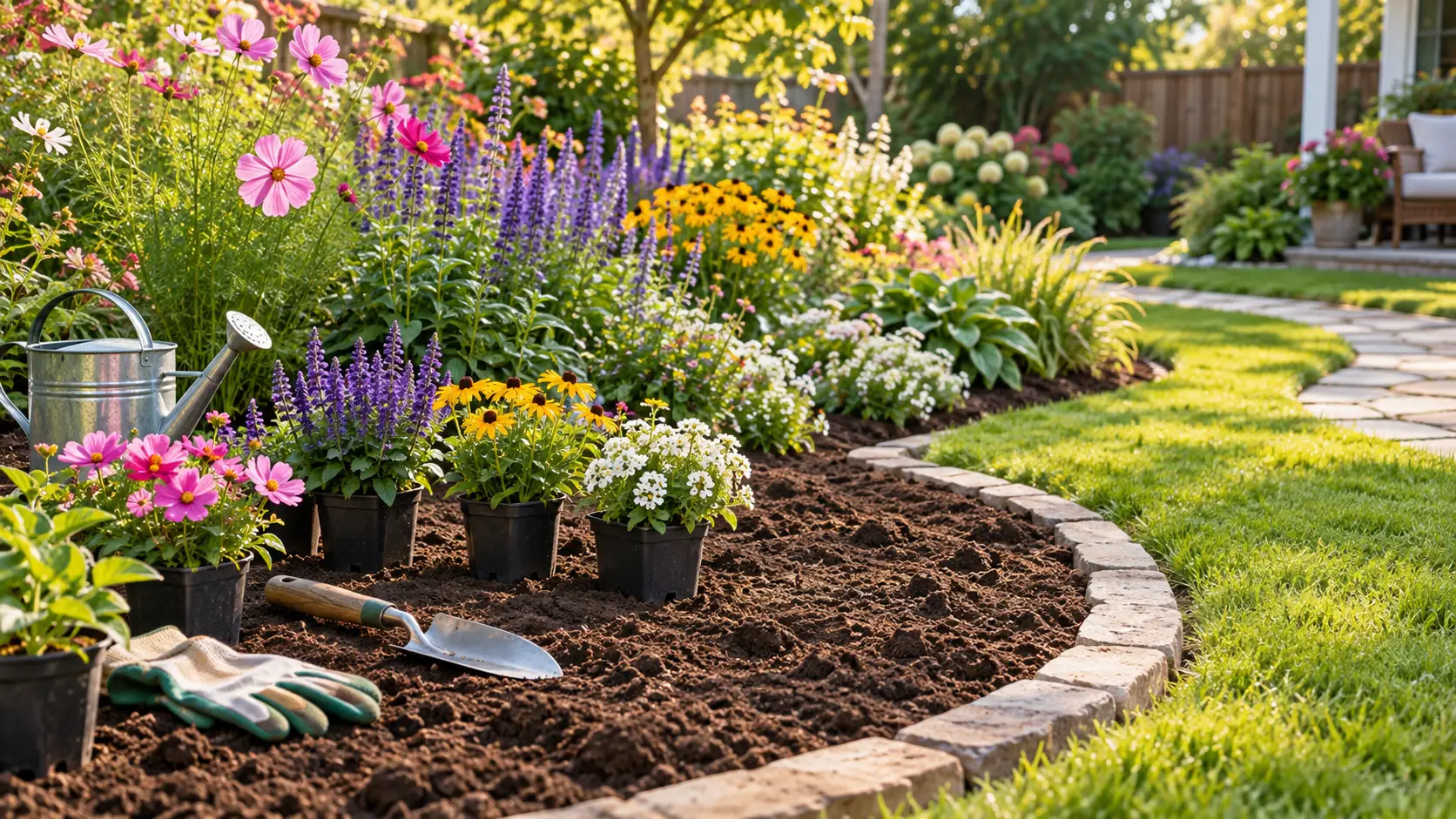
Before planting, position pots on the prepared bed and compare the arrangement with your sketch. Check spacing, mature spread, and access, then plant at the depth appropriate for each species, usually matching its nursery growing level. Water as needed after planting and monitor establishment closely, because newly planted roots cannot access moisture as effectively as established ones.
Create a Practical Watering and Maintenance Routine
Plan how you will water the garden before summer heat or a dry spell makes access inconvenient. A nearby tap, manageable hose route, or suitable irrigation system can save considerable effort. Group plants with similar moisture requirements where possible, so caring for one section does not repeatedly overwater or underwater its neighboring flowers.
Check soil moisture rather than assuming every bed needs water on the same fixed schedule. Watering frequency depends on rainfall, temperature, soil, plant type, and how well roots are established. Mulch can help conserve moisture and suppress some weeds, but use an appropriate material and keep it away from stems and crowns where necessary.
Create a simple routine for checking weeds, plant health, supports, and spent flowers throughout the growing season. Deadheading benefits some plants, while leaving selected seed heads can suit your design or wildlife goals. Keep notes on plants that thrive or struggle, then adjust placement, care, or future choices instead of repeating the same problems each year.
Conclusion
Learning how to plan a flower garden from scratch is mainly about matching your ideas with the conditions you actually have. Start by observing sunlight, checking soil and drainage, and deciding what you want the space to provide. These early decisions help you choose flowers that can grow well and fit comfortably into your everyday routine.
A clear layout, realistic budget, and thoughtful planting list make the project easier to manage from the beginning. Consider mature plant sizes, flowering seasons, colors, and access before preparing the ground or making purchases. Starting small allows you to invest attention where it matters and understand the garden’s needs before taking on a larger area.
Your first design does not need to be permanent or perfect to become a rewarding garden. Watch how plants respond, record what you enjoy, and make gradual improvements as your experience grows. With suitable flowers and consistent care, a bare patch of ground can develop into an inviting space that offers changing interest throughout the seasons.
FAQs
What Is the First Step in Planning a Flower Garden?
Start by observing sunlight, assessing soil and drainage, and deciding what you want the garden to achieve. Understanding these conditions helps you choose a suitable location and plants before spending money or preparing beds.
Should Beginners Choose Annuals or Perennials?
A combination can work well: suitable perennials provide returning structure, while annuals offer flexible seasonal color. Choose both according to your climate, available care time, and the conditions in your particular flower bed.
How Much Space Should I Leave Between Flowers?
Follow spacing guidance based on each plant’s mature spread rather than its current nursery size. Appropriate spacing allows room for growth and access, while helping prevent plants from crowding or shading each other excessively.
Can I Grow a Flower Garden in a Shady Area?
Yes, if you choose flowers suited to the type and amount of shade available. Observe seasonal light changes and consider soil moisture, because dry shade and damp shade require different plant choices.
How Can I Make My Flower Garden Easier to Maintain?
Start with a manageable area, choose locally suitable plants, and organize them by care needs. Prepare the ground thoroughly, provide practical watering access, and maintain a regular routine for weeds and plant checks.


[…] can be tempting to plant flowers very close together so the bed looks full immediately. However, overcrowding can reduce airflow, […]