
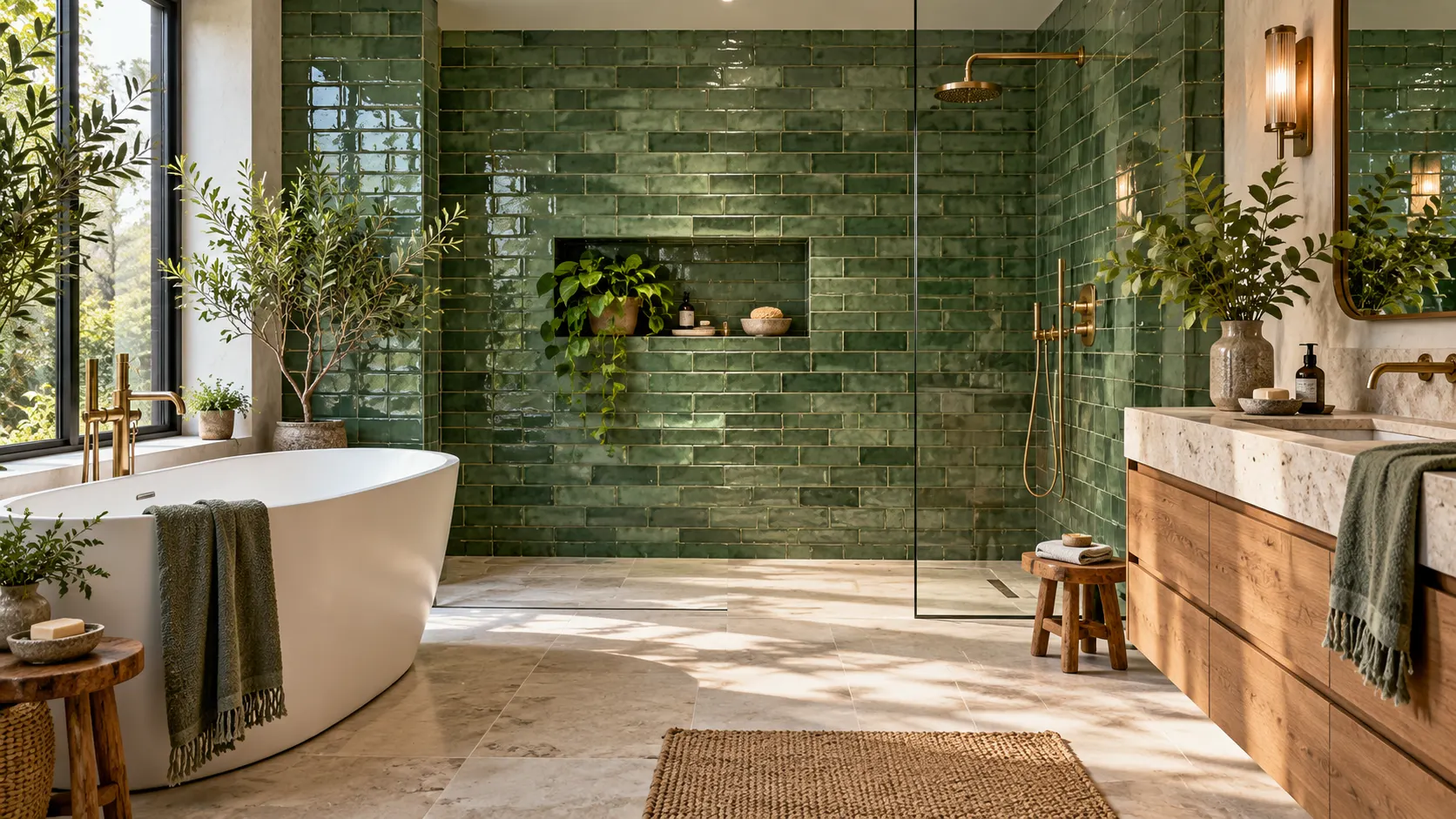
Why Green Tile Makes a Fresh Bathroom
Green tile brings color into a bathroom while keeping the space connected to nature. Pale sage can feel soft and restful, while emerald or forest green adds depth and drama. Because green comes in so many shades and finishes, it can work in a compact powder room, a family bathroom, or a spacious primary suite.
The right tile can also help define different zones. Use it behind a vanity to create a feature wall, across a shower to draw the eye upward, or on the floor to ground a lighter scheme. Pairing green with white, cream, natural wood, or warm metal helps the color feel balanced.
Before choosing a design, consider the room’s lighting, size, and existing fixtures. A dark green tile may look rich in a bright bathroom but feel heavy in a windowless one. Collecting samples and viewing them at different times of day is a useful first step toward bathroom tile inspiration that suits your home.
1. Create a Calm Retreat With Sage Green
Sage green tile is a versatile choice for a bathroom that should feel relaxed rather than dramatic. Its muted tone pairs comfortably with white fixtures, pale wood, and soft gray stone. Use it across a vanity wall or in a shower niche to bring in color without making the room feel visually busy.
A matte finish can make sage tile appear soft and understated, while a glossy glaze reflects more light. Consider handmade-look ceramic tiles if you want subtle variations in color and surface. These small differences give a simple wall added character without relying on a complex pattern or a bold accent.
For a cohesive finish, repeat the green in a small detail elsewhere, such as a painted cabinet, bath mat, or artwork. Keep the rest of the palette restrained so the tile remains the main feature. Among Green Tile Bathroom Ideas, sage is especially adaptable because it works with both modern and traditional fixtures.
2. Add Depth With Emerald Green Tile
Emerald green tile creates a jewel-like focal point that can make a bathroom feel polished and distinctive. It works particularly well behind a vanity, around a bathtub, or on one shower wall. Pair it with white or cream surfaces to create contrast, or combine it with darker finishes for a moodier, more dramatic room.
Glossy emerald tiles reflect light and emphasize their rich color, while satin or matte finishes appear quieter. If you are using a deep shade in a small bathroom, limit it to a feature area and keep the floor, ceiling, and remaining walls light. This helps the room feel balanced instead of enclosed.
Brass or brushed gold hardware can bring warmth to emerald tile, while chrome gives the space a cleaner, cooler look. Use one metal finish consistently across faucets, handles, and lighting for a coordinated appearance. A simple mirror and uncluttered counter help the color stand out without competing with too many decorative details.
3. Try a Green Tile Bathroom Shower
A green tile bathroom shower can serve as the room’s main design feature. Covering the shower’s back wall in a different shade or pattern creates a clear focal point without changing the entire bathroom. For a more enveloping effect, continue the tile across all shower walls and use a simple glass enclosure to keep it visible.
Choose a tile suited to wet areas and confirm that the product and grout are appropriate for shower installation. Smaller tiles can make it easier to create a slope on the shower floor, while larger wall tiles have fewer grout lines. A professional installer can help coordinate the layout, waterproofing, and drain placement.
Think about how the shower tile connects with the rest of the room. A green shower paired with neutral wall paint and a pale floor can feel fresh and open. You can also repeat the same tile in a niche or on the vanity backsplash, creating continuity without extending it across every surface.
4. Mix Green Tile Across the Bathroom Floor and Wall
Using green tile on both the bathroom floor and wall can create a connected, immersive look. To keep the room from feeling overwhelming, vary the tile size, pattern, or finish while staying within a related color family. For example, pair small green floor mosaics with larger, calmer tiles on the wall.
A clear transition between surfaces helps the design feel planned. You might use green tile on the lower half of the walls and a pale paint above it, or reserve the color for the floor and one feature wall. These approaches preserve the visual impact of the tile while giving the eye a lighter area to rest.
Pay attention to how the tiles meet at corners, thresholds, and around fixtures. Consistent grout color can make a tiled surface feel unified, while contrasting grout highlights the shape of each tile. When planning a green tile bathroom floor wall scheme, ask for a layout drawing so you can review how the pattern will align.
5. Use Green Subway Tile in a Fresh Layout
Green subway tile gives a familiar bathroom material a new personality. The traditional rectangular shape feels at home in both classic and contemporary spaces, and its layout can change the mood. A horizontal pattern looks clean and calm, while a vertical stack can draw attention upward and make a low ceiling feel taller.
A herringbone arrangement adds movement, but it usually involves more cuts and installation time than a straight layout. Decide whether you want the grout to blend with the tile or create a visible grid. Matching grout creates a smoother color field; pale contrasting grout emphasizes the individual tile shapes.
Use subway tile as a backsplash, vanity feature, or shower surround, then keep nearby surfaces relatively simple. Pairing green tile with a white countertop and a wood-framed mirror gives it warmth without adding another busy pattern. This is a practical design option when you want an update that feels distinctive but still easy to live with.
6. Make a Statement With Green Mosaic Tile
Mosaic tile can introduce intricate detail without requiring a large area. Small squares, hexagons, and penny rounds each create a different visual rhythm, making them useful for a shower floor, niche, or compact backsplash. A mix of green shades can add depth, while a single-color mosaic creates a more orderly appearance.
Because mosaics contain many grout lines, consider how much cleaning and maintenance you are comfortable with. Select a grout color that suits the tile and ask the installer about sealing requirements. On a shower floor, confirm that the tile is suitable for underfoot use and provides appropriate traction.
For a balanced room, combine a mosaic accent with larger-format tiles on the surrounding walls. This contrast lets the detailed surface stand out and prevents the bathroom from feeling overly patterned. A mosaic border can also link the shower, vanity, and floor colors without covering the full wall.
7. Pair Green Tile With Natural Wood
Green tile and natural wood make a bathroom feel grounded and welcoming. A wood vanity can soften a wall of green tile, while shelves or a framed mirror introduce a lighter touch. This combination works with pale sage as well as deeper olive and forest tones, depending on the atmosphere you want.
Choose wood finishes that can handle bathroom conditions, and use suitable protection around sinks and tubs. If real wood is not practical, wood-look cabinetry or porcelain tile can offer a similar visual effect with easier care. Keep the grain and finish relatively simple so they complement the tile instead of competing with it.
To finish the palette, add white towels, a stone countertop, or a few woven accessories. These materials give the room texture and keep the green-and-wood combination from feeling too uniform. This kind of Green Tile Bathroom inspo suits homes that favor natural materials and a comfortable, spa-like mood.
8. Combine Green Tile With Wallpaper
Green tile bathroom with wallpaper designs can bring pattern and color together when each surface has a defined role. Tile is well suited to splash-prone areas, while wallpaper can add character to a dry upper wall, powder room, or vanity area. Choose a wallpaper pattern that includes a green tone found in the tile.
Balance is important when both materials have strong visual detail. A patterned wallpaper usually works best with a simple tile shape, while a bold geometric tile may suit a more subtle wallpaper. Consider using a chair rail or tile border to create a clean transition between the surfaces.
Check that the wallpaper is appropriate for the room’s humidity and ventilation, and keep it away from direct water exposure. Good airflow helps protect the finish over time. When the patterns and colors relate to one another, the combination feels intentional rather than like two separate design ideas competing for attention.
9. Add Character With a Green Tile Panel
A green tile panel creates a feature without covering every wall. Place it behind a freestanding bathtub, above a vanity, or inside a recessed shower area to frame an important part of the room. A defined panel can also be useful when you want a splash of color but have a limited remodeling budget.
Decide on the panel’s width and height before installation. It should relate to the size of the furniture or fixture beneath it, with edges that align cleanly where possible. A narrow strip may look accidental, so use painter’s tape or a digital room mockup to preview the proportions before committing.
You can make a tile panel stand out with a border, a different tile shape, or a contrasting grout. Alternatively, use the same tile but change its layout to create a subtle distinction. Keep adjacent walls simple so the panel reads as a deliberate design feature rather than an unfinished section of a larger wall.
10. Coordinate Green Tile With Paint and Fixtures
Paint can help green tile feel connected to the rest of the bathroom. A soft white or warm neutral gives the tile room to stand out, while a pale green paint can create a tonal effect. If you want more contrast, consider a complementary shade on the vanity or a small section of wall.
Test paint beside the actual tile rather than relying on a screen or color card alone. Green can shift in appearance under warm bulbs, cool daylight, and shadows. A sample painted on a board is easy to move around, helping you see how the proposed Green Tile Bathroom Paint colour works at different times of day.
Fixtures and accessories complete the palette. Chrome and nickel feel crisp, while brass and bronze add warmth; black hardware can provide a sharper outline. Match the finish across the main fittings, then use towels or a small accessory to introduce another accent color without making the room feel crowded.
How to Choose Green Bathroom Tile
Start with the practical needs of the surface. Floor tiles need to be suitable for walking and provide appropriate slip resistance, while shower walls require materials and installation methods designed for wet areas. Ask the supplier or installer to confirm that the tile is appropriate for its intended location and to explain any care requirements.
Next, narrow down the shade and format by looking at the room as a whole. A small bathroom may benefit from a lighter tile or a focused accent, while a larger space can support deeper greens across more surfaces. Bring samples together with paint, countertop, and cabinet choices before making a final selection.
Searches for Green Tile Bathroom Ideas floor and decor often point people toward comparing tile styles, finishes, and room combinations before buying. Look at samples in person where possible, and check product details such as size variation, finish, and recommended grout. Ordering a little extra material can also help cover cuts or future repairs.
Conclusion
Green tile offers many ways to refresh a bathroom, from soft sage walls and emerald showers to mosaics, tile panels, and patterned combinations. The best choice depends on the room’s size, light, daily use, and the overall mood you want to create. A sample-led plan can help you see how color and finish work together before installation.
For a balanced design, give each material a clear role. Pair bold tile with calmer surfaces, coordinate paint and fixtures, and consider maintenance as well as appearance. Whether you cover one feature wall or build a more immersive scheme, thoughtful proportions help the tile feel integrated into the room.
Use these green tile bathroom ideas as a starting point, then adapt them to your own layout and budget. Good lighting, suitable tile selection, and careful installation can make the finished space both attractive and practical. Even a small update, such as a tiled vanity panel or shower niche, can bring a fresh look.
FAQs
What colors go well with green bathroom tile?
Green tile pairs well with white, cream, beige, natural wood, and soft gray. Brass adds warmth, while chrome or nickel creates a cooler finish. Choose a grout color that supports the effect you want.
Is green tile a good choice for a small bathroom?
Yes. Lighter shades such as sage can keep a small bathroom feeling open, while a darker green works well as a focused accent. Pair it with light walls and good lighting for balance.
Can I use green tile on a bathroom floor?
Yes, as long as the tile is rated for floor use and provides suitable traction for the location. Ask the supplier or installer about slip resistance, grout, and maintenance before choosing a specific product.
What paint color works with green bathroom tile?
Warm white, cream, and pale neutral shades are reliable options. You can also use a muted green for a tonal scheme, but test a paint sample beside the tile in the bathroom’s actual lighting.
Can I use wallpaper with green bathroom tile?
Yes. Use wallpaper in a dry area, such as above a vanity or on an upper wall, and keep it away from direct water exposure. Coordinate one color or pattern detail with the tile for a cohesive look.