
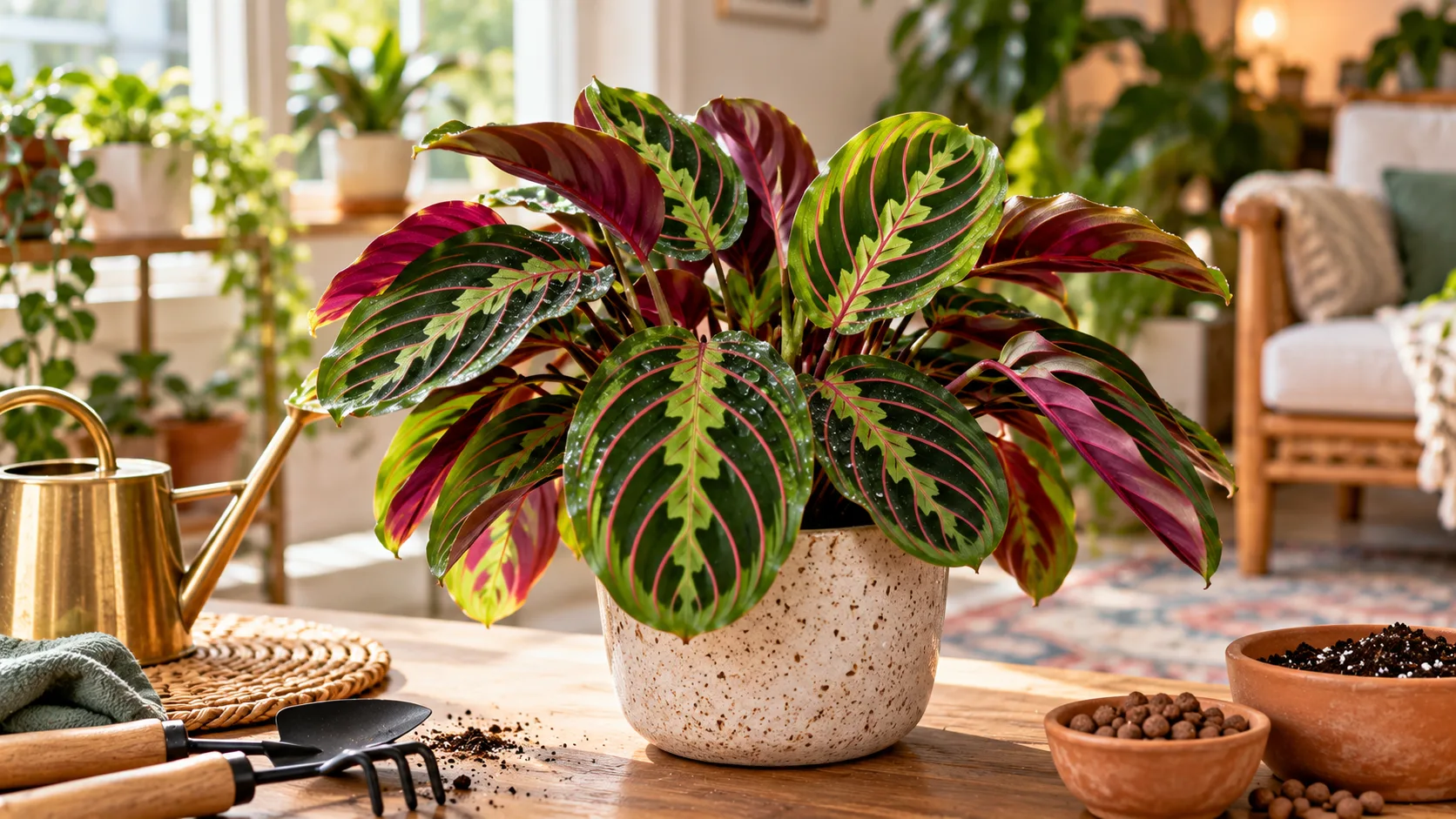
The prayer plant is one of the most beautiful indoor plants, known for its colorful patterned leaves and fascinating daily movements. Its leaves often fold upward during the evening, creating an appearance similar to hands joined in prayer. This unique characteristic, combined with attractive foliage, makes it a popular choice for houseplant enthusiasts. With suitable growing conditions, prayer plants can bring vibrant greenery into homes and offices.
Scientifically known as Maranta leuconeura, the prayer plant belongs to the Marantaceae family and originates from tropical regions of Brazil. It thrives in warm environments with indirect sunlight, consistent moisture, and relatively high humidity. Although it requires more attention than some beginner-friendly houseplants, understanding its basic needs makes successful indoor cultivation much easier.
This comprehensive prayer plant care guide explains everything you need to know about growing healthy plants indoors. You will discover ideal lighting conditions, watering techniques, soil requirements, propagation methods, and common varieties. Whether you are growing your first prayer plant or improving the health of an existing one, these practical tips can help you maintain beautiful foliage throughout the year.
What Is a Prayer Plant and Why Is It Popular?
The prayer plant is a tropical perennial valued primarily for its attractive ornamental leaves. Its foliage typically features decorative markings, contrasting veins, and different shades of green, red, or cream. Unlike many upright indoor plants, Maranta usually grows in a spreading or trailing pattern. This makes it particularly suitable for shelves, decorative planters, and hanging baskets.
One of its most fascinating characteristics is the movement of its leaves throughout the day. This natural response, known as nyctinasty, causes the leaves to change position in response to daily light cycles. During the evening, they often rise and fold closer together. In daylight, the leaves generally spread outward to capture available light.
Prayer plants are popular because they offer impressive foliage without requiring direct sunlight. Their compact growing habit makes them suitable for apartments, bedrooms, and indoor spaces with filtered natural light. Different varieties also provide attractive color combinations for interior decoration. Understanding their tropical origins helps explain why warmth, moisture, and humidity are so important to their growth.
Best Light Conditions for a Healthy Prayer Plant
Prayer plants grow best in bright, indirect sunlight that resembles the filtered light of tropical forest floors. Direct exposure to strong sunlight can damage their delicate foliage and cause faded colors. An east-facing window often provides suitable lighting when the plant receives gentle morning sunshine. Bright rooms with filtered natural light are also excellent growing locations.
A north-facing window may work well in some homes, depending on available daylight and nearby obstructions. South-facing or west-facing windows can also be suitable when sheer curtains filter intense sunlight. Positioning the plant a short distance from strong afternoon rays helps protect its leaves. The goal is to provide consistent brightness without exposing the foliage to excessive heat.
Insufficient light can slow growth and reduce the intensity of leaf patterns over time. Leaves may also become smaller or develop a less vigorous appearance. If natural light is limited, a suitable indoor grow light can provide additional illumination. Monitor the plant’s response and make gradual adjustments rather than repeatedly changing its location.
How Often Should You Water a Prayer Plant?
Proper watering is one of the most important aspects of prayer plant care. These tropical plants prefer consistently lightly moist soil but do not tolerate prolonged waterlogging. Allow the upper layer of the potting mix to become slightly dry before watering again. Checking soil moisture is more reliable than following a fixed watering schedule.
Water the plant thoroughly until excess moisture begins draining from the container’s drainage holes. Empty any collected water from the saucer so the roots do not remain submerged. During warmer months, the plant may require more frequent watering because the soil dries faster. Watering needs generally decrease during cooler periods when growth slows.
Prayer plants can be sensitive to mineral buildup and certain substances found in tap water. If leaf tips repeatedly turn brown despite suitable humidity, consider trying rainwater, distilled water, or appropriately filtered water. Use water near room temperature to avoid sudden temperature changes. Consistent moisture management helps maintain healthy roots and attractive foliage.
Ideal Temperature and Humidity for Prayer Plants
Prayer plants originate from warm tropical environments and prefer stable indoor temperatures. A temperature range of approximately 65°F to 80°F (18°C to 27°C) is generally suitable for healthy growth. Exposure to cold drafts or sudden temperature changes can stress the plant. Keeping it away from frequently opened exterior doors and cold windows is helpful.
Humidity is especially important because prayer plants naturally grow in moist forest environments. Indoor humidity around 50% to 60% or somewhat higher can help maintain attractive foliage. Dry indoor air may cause leaf edges to become brown or crispy. A room humidifier is often a practical way to maintain consistent humidity during dry weather.
Grouping compatible houseplants together can also help create a slightly more humid environment around their foliage. Avoid positioning prayer plants directly beside heating vents, radiators, or air-conditioning outlets. These locations may create excessive dryness or temperature fluctuations. Maintaining stable warmth and suitable humidity supports healthy leaf development throughout the growing season.
Choosing the Best Soil for Prayer Plant Growth
Prayer plants need a potting mix that retains some moisture while allowing excess water to drain efficiently. Heavy garden soil is generally unsuitable because it can become compacted and restrict root development. A high-quality indoor plant potting mix provides a useful starting point. Adding suitable aeration materials can improve drainage without allowing the roots to dry too quickly.
A practical growing medium may combine regular potting mix with perlite and a modest amount of moisture-retaining material. Fine orchid bark or coco coir can also be useful depending on the original mix. The goal is to create an airy growing environment that supports moisture retention. Avoid using containers filled entirely with dense, poorly draining material.
Prayer plants generally prefer slightly acidic growing conditions, although ordinary quality houseplant mixes are often suitable. Choose a container with drainage holes to reduce the risk of water accumulating around the roots. Check the soil periodically for compaction or poor drainage. Healthy soil structure helps support balanced moisture levels and steady plant growth.
How to Fertilize a Prayer Plant Properly
Prayer plants benefit from occasional feeding during periods of active growth. Spring and summer are generally the most suitable seasons for applying fertilizer. A balanced liquid houseplant fertilizer diluted according to its label can supply useful nutrients. Avoid applying excessive fertilizer because prayer plants can be sensitive to mineral accumulation in the soil.
Feeding approximately once every four to six weeks during active growth is a reasonable starting point for many indoor plants. The appropriate frequency depends on the fertilizer strength, potting mix, and growth conditions. Always follow product directions rather than assuming stronger solutions produce faster growth. Watering appropriately before feeding may help avoid applying concentrated fertilizer to very dry roots.
During autumn and winter, prayer plants often grow more slowly because natural daylight decreases. Fertilizer requirements may be reduced or temporarily suspended during these periods. Watch for signs of mineral buildup, including crusty deposits on the soil surface or repeated leaf-tip damage. Moderate feeding helps maintain attractive foliage without placing unnecessary stress on the roots.
How to Repot a Prayer Plant Without Damaging It
Repotting helps refresh the growing medium and provides additional space when a prayer plant becomes root-bound. These plants generally do not require frequent repotting when their roots remain healthy. Signs that repotting may be useful include roots emerging from drainage holes and unusually rapid drying of the potting mix. Spring is often a convenient time for this process.
Choose a new container only slightly larger than the existing one, usually around one to two inches wider. Large pots can retain unnecessary moisture and increase the risk of overwatering. Carefully remove the plant and inspect its roots before transferring it into fresh potting mix. Avoid pulling aggressively on delicate stems or damaging healthy root sections.
Position the plant at approximately the same soil depth as it occupied in the previous container. Gently fill the surrounding space with fresh potting mix without compressing it excessively. Water appropriately and return the plant to bright, indirect light. Some temporary adjustment after repotting is normal, so avoid unnecessary fertilizer or repeated relocation immediately afterward.
How to Propagate a Prayer Plant at Home
Propagating a prayer plant is a rewarding way to grow additional plants from an established specimen. Two common propagation methods include root division and suitable stem cuttings. Spring and early summer are generally convenient periods because plants are actively growing. Successful propagation requires healthy parent plants, suitable moisture, and warm growing conditions.
Root division involves removing a mature plant from its container and carefully separating naturally connected sections. Each division should retain healthy roots and several leaves to support continued growth. Place the separated plants into smaller containers containing fresh, well-draining potting mix. Water appropriately and position them in bright, indirect light while they establish.
Stem cuttings can also produce new prayer plants when suitable stem nodes are available. Select a healthy stem and make a clean cut below a node using sanitized pruning equipment. Place the node in water or a suitable moist propagation medium until roots develop. Once the roots are established, transfer the cutting into potting mix and maintain consistent humidity.
Popular Prayer Plant Varieties to Grow Indoors
Prayer plants are available in several attractive varieties and cultivars with distinctive leaf patterns. Their decorative foliage features different combinations of green, cream, silver, and red. Although their appearances vary, most have similar requirements for indirect sunlight and humidity. Choosing a variety that suits your decorating preferences can make growing these tropical plants even more enjoyable.
The red prayer plant, often sold as Maranta leuconeura ‘Erythroneura’ or ‘Fascinator’, is famous for its bright red veins and dark green foliage. The green prayer plant, commonly called ‘Kerchoveana’, features darker patches resembling rabbit tracks. Lemon Lime prayer plants display striking lime-green veins instead of red. Each variety creates a distinctive appearance in indoor plant collections.
Other attractive selections include Silver Band and darker-leaved forms with silvery or contrasting markings. Plant labels sometimes use different botanical or commercial names for similar-looking varieties. Regardless of the chosen type, maintaining suitable growing conditions is more important than decorative appearance alone. Healthy foliage develops best when lighting, watering, and humidity remain consistent.
Why Are Prayer Plant Leaves Curling or Turning Brown?
Curling leaves are among the most common concerns when growing prayer plants indoors. This symptom may result from insufficient moisture, low humidity, excessive sunlight, or sudden temperature changes. Prayer plants also move their leaves naturally during daily light cycles, which should not automatically be mistaken for damage. Persistent curling accompanied by dry edges usually indicates environmental stress.
Brown leaf tips often develop when indoor air becomes excessively dry or soil moisture fluctuates significantly. Mineral accumulation from water or excessive fertilizer may also contribute to damaged foliage. Yellowing leaves can indicate overwatering, poor drainage, or aging foliage. Examine the soil and growing environment before changing your routine, because different problems may produce similar symptoms.
To improve plant health, check soil moisture, assess nearby sunlight, and measure indoor humidity when possible. Remove completely damaged leaves with clean pruning tools if necessary. Avoid changing several growing conditions at once, because this makes the underlying problem harder to identify. Consistent care usually supports healthier new growth, although existing damaged leaf tissue will not recover.
Common Prayer Plant Pests and Diseases
Prayer plants can occasionally experience problems with common indoor pests, particularly spider mites and mealybugs. Spider mites may cause fine webbing and small discolored spots across the foliage. Mealybugs often appear as white, cotton-like clusters around stems and leaf joints. Regular inspections help identify these problems before they spread to nearby houseplants.
If pests appear, isolate the affected plant from the rest of your indoor collection. Inspect both sides of the leaves and gently remove visible pests using appropriate plant-safe cleaning methods. Some infestations may require a treatment specifically labeled for indoor ornamental plants. Always follow product instructions and avoid applying untested chemical mixtures to delicate foliage.
Root rot is another common problem associated with excessive moisture and poorly draining soil. Affected plants may develop yellow leaves, weak growth, and unhealthy roots. Improving drainage and adjusting watering habits can help prevent additional damage. If the roots are severely affected, removing compromised sections and repotting in fresh growing medium may be necessary.
Is the Prayer Plant Safe for Cats and Dogs?
Prayer plants are generally considered non-toxic to cats and dogs, making them a popular choice for pet-friendly indoor spaces. Maranta leuconeura is not classified as a toxic houseplant by major animal safety references. Its attractive leaves and trailing growth habit make it suitable for decorative shelves and hanging baskets. However, non-toxic does not mean that pets should regularly chew or eat the foliage.
Consuming large amounts of any unfamiliar plant material may cause temporary digestive discomfort in some animals. Curious pets may also damage delicate stems or overturn plant containers. Positioning prayer plants in secure locations helps protect both the plant and household animals. Avoid leaving fertilizer, potting supplies, or plant treatments where pets can access them.
When purchasing plants, verify the botanical name rather than relying only on common labels. Different houseplants may be sold under similar names despite belonging to separate plant groups. If a pet develops unusual symptoms after eating plant material, contact a veterinarian for appropriate advice. Responsible placement and ordinary household precautions help maintain a safer environment.
Best Places to Keep a Prayer Plant Indoors
Choosing the right location is essential for maintaining a healthy prayer plant. Bright rooms with filtered natural light are generally ideal because the foliage is sensitive to intense sunlight. Shelves, plant stands, and decorative tables near suitable windows provide attractive display options. Avoid placing the plant directly against cold glass or near strong heating and cooling vents.
Bathrooms with adequate natural light can sometimes provide favorable humidity levels for prayer plants. Kitchens may also be suitable when temperatures remain stable and plants are kept away from cooking heat. Hanging baskets allow spreading stems to develop naturally and create beautiful decorative displays. Make sure any chosen location provides enough room for leaves to unfold comfortably.
Prayer plants can also complement indoor plant collections containing other humidity-loving tropical species. Grouping plants together creates an attractive arrangement while helping maintain a favorable local environment. However, sufficient airflow remains important to reduce excessive surface moisture and related problems. A consistent location with appropriate light and humidity is usually better than frequently moving the plant.
Conclusion
The prayer plant is a beautiful tropical houseplant known for its decorative foliage and fascinating nighttime leaf movements. With proper care, Maranta leuconeura can thrive indoors and create an attractive display of colorful leaves. Bright indirect sunlight, consistently moist soil, and sufficient humidity are essential for healthy growth. Understanding these basic requirements makes prayer plant care much easier.
Growing a healthy prayer plant also involves choosing suitable soil, maintaining stable temperatures, and feeding moderately during active growth. Repotting and propagation provide opportunities to maintain established plants and expand your indoor collection. Popular varieties such as Red Prayer Plant, Lemon Lime, and Kerchoveana offer different decorative patterns. Regular inspections help identify potential problems before they become serious.
Successful prayer plant care depends on consistency rather than complicated maintenance routines. Check soil moisture regularly, protect the foliage from intense sunlight, and avoid exposing the plant to dry air or cold drafts. Adjust growing conditions gradually when signs of stress appear. With patience and appropriate care, your prayer plant can remain a beautiful addition to your indoor garden.
Frequently Asked Questions
How often should I water a prayer plant?
Water your prayer plant when the upper layer of soil begins to dry. Keep the growing medium lightly moist without allowing water to accumulate around the roots, and reduce watering during slower winter growth.
Does a prayer plant need direct sunlight?
No, prayer plants prefer bright, indirect sunlight. Strong direct sunlight can fade their decorative leaf patterns and damage foliage. Position the plant near a bright window with filtered natural light.
Why does my prayer plant fold its leaves at night?
Prayer plants naturally raise and fold their leaves during the evening through a process called nyctinasty. This movement follows daily light cycles and is a normal characteristic of healthy Maranta plants.
Can prayer plants grow in low light?
Prayer plants tolerate moderately low light, but growth may become slower and leaf colors less vibrant. Bright, indirect sunlight generally provides better conditions for maintaining healthy foliage and attractive patterns.
Are prayer plants difficult to care for?
Prayer plants require more consistent moisture and humidity than some common houseplants. However, they can grow successfully indoors when provided with suitable light, well-draining soil, stable temperatures, and regular attention.