
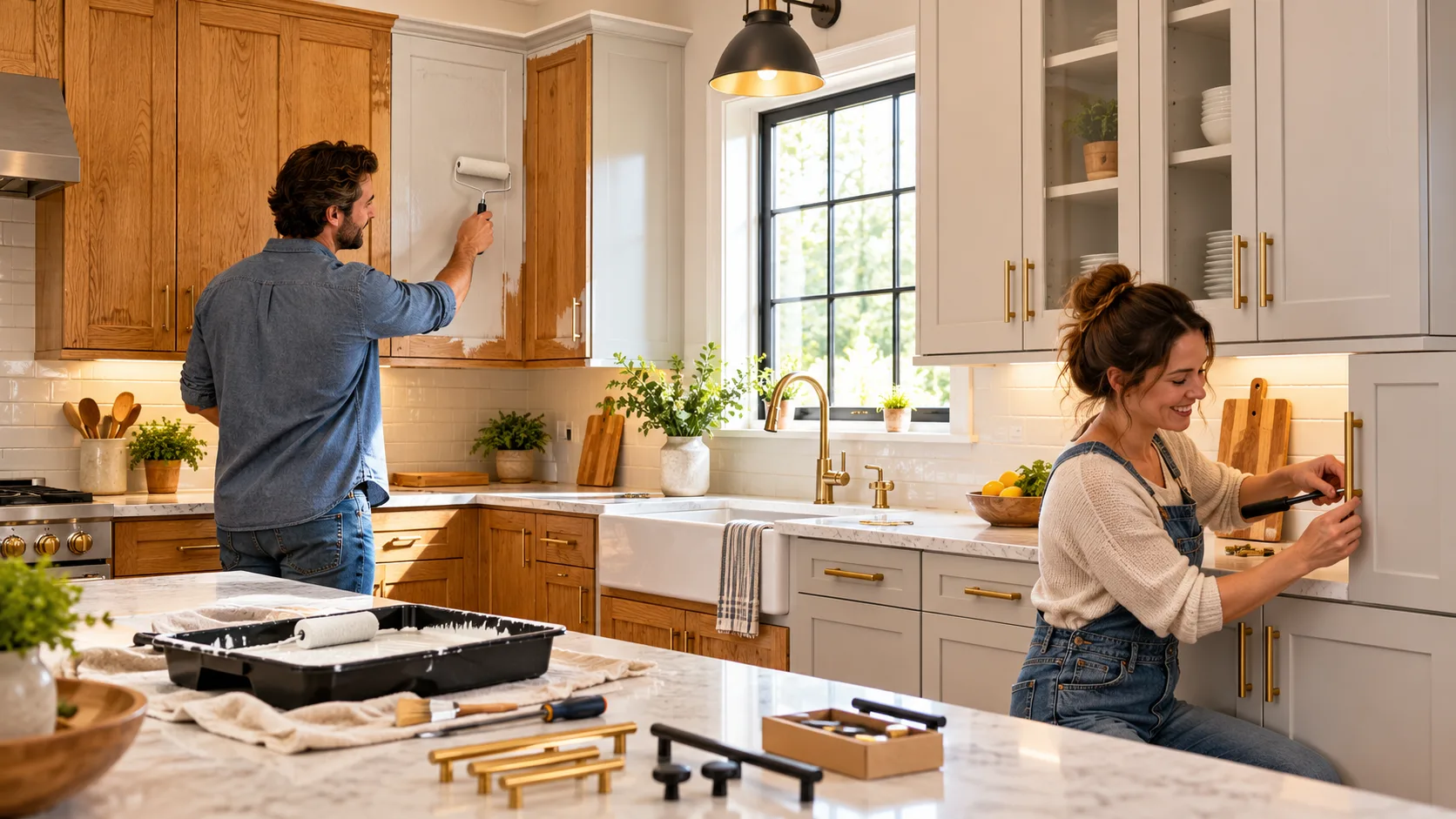
Updating kitchen cabinets is one of the most effective ways to refresh your kitchen without spending money on a complete renovation. Cabinets occupy a large portion of the kitchen’s visual space, making their appearance important to the overall design. Fortunately, there are several affordable ways to improve outdated cabinets while keeping their existing structure.
From painting cabinet doors to replacing old handles, small improvements can make a noticeable difference. Homeowners can also explore cabinet refinishing, decorative molding, removable wallpaper, and modern lighting solutions. These kitchen cabinet makeover ideas provide opportunities to create a fresh appearance without the expense of purchasing entirely new cabinetry.
Learning how to update kitchen cabinets without replacing them helps homeowners improve appearance, functionality, and storage while controlling renovation costs. The most suitable method depends on cabinet condition, materials, and personal design preferences. This guide explores practical cabinet upgrades, budget-friendly techniques, and common mistakes to avoid during a kitchen refresh.
Why Update Kitchen Cabinets Instead of Replacing Them?
Replacing kitchen cabinets can be expensive, particularly when the existing layout requires custom cabinetry or significant installation work. Updating the current cabinets allows homeowners to improve their appearance while preserving usable materials. This approach can be especially practical when cabinet boxes remain structurally sound.
Cabinet updates also provide flexibility because improvements can be completed gradually. Homeowners may begin by changing hardware before moving toward refinishing or painting. These smaller projects can create visible improvements without requiring a complete kitchen redesign or extended disruption to daily activities.
Keeping existing cabinets may also reduce construction waste compared with removing functional cabinetry. However, older units should be inspected for water damage, unstable joints, and other structural problems. Cosmetic improvements are most effective when the original cabinets remain safe, durable, and suitable for continued use.
Inspect Your Kitchen Cabinets Before Updating
Before beginning a kitchen cabinet makeover, carefully examine the condition of the doors, drawers, frames, and cabinet boxes. Look for loose hinges, swollen panels, peeling surfaces, and evidence of moisture damage. These problems may affect which renovation methods are appropriate.
Cabinets made from solid wood, plywood, laminate, or medium-density fiberboard require different preparation techniques. For example, painted wood may need a different primer from a smooth laminate surface. Identifying the material helps prevent problems involving poor adhesion or damaged finishes.
Check whether cabinet doors close properly and drawers move smoothly. Minor hardware problems may be relatively easy to correct, while extensive water damage can require professional repairs. Addressing functional issues first creates a more reliable foundation for decorative improvements.
Paint Kitchen Cabinets for a Fresh Look
Painting is one of the most popular ways to update kitchen cabinets without replacing them. A new color can transform outdated cabinetry and create a more contemporary appearance. Homeowners can choose from neutral shades, darker finishes, or colors that complement existing countertops and flooring.
Successful cabinet painting depends heavily on surface preparation. Grease, dirt, and damaged finishes can prevent paint from adhering correctly. Cleaning, appropriate sanding or deglossing, priming, and using cabinet-compatible coatings help create a durable result.
Before painting the entire kitchen, test the selected finish on a small area. Different cabinet materials may require specialized products and preparation methods. Allowing sufficient drying and curing time also helps protect the new surface from everyday wear.
Choose the Best Paint Colors for Kitchen Cabinets
Cabinet color can significantly influence the atmosphere of a kitchen. White, cream, and soft gray remain flexible options that work with many interior styles. These shades can create a bright, coordinated appearance when paired with suitable countertops and backsplash materials.
Darker colors such as navy blue, charcoal, and forest green can add visual depth to cabinetry. Warm neutrals and muted earth tones may create a softer, more welcoming environment. The best choice depends on room size, natural light, and existing decorative elements.
Homeowners should examine color samples under both natural and artificial lighting before committing to a finish. Paint can appear different throughout the day depending on surrounding surfaces. Testing colors helps create a balanced kitchen design that reflects personal preferences.
Refinish Wooden Cabinets to Restore Their Appearance
Cabinet refinishing is a useful option when wooden cabinets have attractive natural grain but an outdated or worn surface. Instead of applying an entirely different color, refinishing can restore their appearance. The method often involves preparing the existing finish before applying a suitable protective coating.
Solid wood cabinets may be candidates for sanding and restaining, depending on their condition. Veneered surfaces require more caution because excessive sanding can damage the thin wood layer. Understanding the cabinet construction is important before choosing a refinishing process.
Refinishing can help preserve traditional wooden cabinetry while improving its appearance. However, damaged finishes may require specialized restoration techniques. Professional assistance can be valuable when working with delicate veneers, unfamiliar coatings, or older cabinetry with uncertain materials.
Replace Cabinet Handles and Knobs
Replacing cabinet hardware is one of the simplest kitchen upgrades for homeowners working with a limited budget. Old handles and knobs can make otherwise functional cabinetry appear dated. New hardware creates a noticeable decorative change without requiring major construction.
Modern cabinet hardware is available in finishes such as brushed nickel, matte black, brass, and polished chrome. Different shapes can complement contemporary, traditional, or transitional kitchen designs. Homeowners should consider how the selected hardware coordinates with faucets and other visible fixtures.
Measure existing mounting holes before purchasing replacements. Choosing hardware with compatible dimensions can reduce the need for additional drilling or surface repairs. Well-fitted handles also improve everyday usability by making drawers and cabinet doors easier to operate.
Add Decorative Molding to Cabinet Doors
Decorative molding can change the appearance of plain kitchen cabinet doors without replacing the entire cabinet structure. It is often used to create framed details or add traditional character. This approach may be suitable for homeowners who want more architectural interest.
Lightweight trim can create visual depth when attached to compatible cabinet surfaces. However, door thickness, clearance, and material strength must be considered before making modifications. Additional molding should not prevent doors from opening or closing properly.
A consistent design across cabinet doors helps create a coordinated appearance. Painting the trim and door in matching colors can produce a unified finish. Homeowners should evaluate whether the added details complement the kitchen’s existing architecture before beginning the project.
Use Peel-and-Stick Wallpaper for Cabinet Accents
Removable wallpaper can provide a decorative update to selected kitchen cabinet surfaces. It is especially useful for adding patterns or colors to cabinet interiors and other low-wear areas. This approach allows homeowners to experiment with design without permanently changing every surface.
Peel-and-stick materials are available in patterns resembling wood, stone, geometric shapes, and traditional wallpaper designs. Their appearance and durability depend on product quality and the surface beneath them. Smooth, properly prepared areas generally provide more reliable adhesion.
Kitchen cabinets are exposed to humidity, grease, and frequent handling, which can affect adhesive materials. Removable wallpaper may not perform well near sinks, cooktops, or damaged surfaces. Selecting products designed for appropriate conditions helps reduce peeling and premature wear.
Update Cabinet Doors With New Panels
Replacing or modifying cabinet door panels can refresh the kitchen while preserving existing cabinet boxes. This option may be useful when doors are worn but the underlying structure remains sound. Different panel designs can create either a traditional or contemporary appearance.
Some cabinet doors can accommodate decorative inserts or new center panels, depending on their construction. Glass panels, wood inserts, and other materials may provide distinctive design options. However, cutting or altering doors requires appropriate tools and careful attention to structural stability.
Professional cabinetmakers can help determine whether existing doors are suitable for modification. Certain laminated or hollow-core designs may not support major alterations. Evaluating the door construction before making changes prevents unnecessary damage and additional replacement costs.
Add Glass Inserts for a Modern Cabinet Look
Glass-front cabinets can create a more open appearance while displaying selected kitchen items. They are often used for upper cabinets containing dishes, glassware, or decorative accessories. Replacing suitable center panels with glass may refresh cabinetry without rebuilding the entire kitchen.
Clear, frosted, and textured glass offer different levels of visibility and decorative interest. Frosted designs can provide a softer appearance while partially concealing cabinet contents. The chosen style should complement surrounding cabinetry and the overall kitchen design.
Glass installation requires secure framing and materials appropriate for the intended application. Some cabinet doors may not be suitable for modification without professional assistance. Safety glazing and reliable installation are important considerations, particularly in busy family kitchens.
Install Under-Cabinet Lighting
Under-cabinet lighting can improve the appearance and functionality of kitchen workspaces. These fixtures illuminate countertops and may make food preparation areas more comfortable to use. They can also highlight backsplash materials and create a welcoming atmosphere.
LED lighting strips and purpose-built fixtures are common options for modern kitchens. Some products use plug-in connections, while others require permanent electrical installation. The most suitable arrangement depends on cabinet design, available power connections, and lighting requirements.
Homeowners should select lighting products designed for kitchen environments and follow manufacturer instructions. Hardwired installations should be handled by qualified professionals when required. Properly positioned lighting can provide practical benefits without replacing cabinets or changing the kitchen layout.
Improve Cabinet Storage With Organizers
Updating kitchen cabinets is not limited to changing their appearance. Interior organization can significantly improve how existing cabinetry functions. Simple storage accessories help homeowners use available space more effectively while keeping frequently used items accessible.
Pull-out organizers, drawer dividers, shelf risers, and adjustable shelving can improve storage arrangements. Corner cabinets may benefit from compatible rotating or pull-out systems. Choosing accessories according to actual storage needs helps avoid purchasing products that create unnecessary clutter.
Before installing organizers, measure cabinet interiors and check their weight capacity. Heavy accessories or overloaded shelves may damage older cabinetry. Practical storage improvements can make a kitchen feel more functional even when its external appearance remains unchanged.
Replace Old Cabinet Hinges
Worn cabinet hinges can cause doors to sag, stick, or close unevenly. Replacing damaged hardware may improve functionality without changing cabinet doors. This is particularly useful when existing cabinets remain attractive but no longer operate smoothly.
Modern concealed hinges can create a cleaner appearance in compatible cabinet designs. Some models also offer soft-close mechanisms that reduce door slamming. However, hinge compatibility depends on the cabinet construction, mounting positions, and door dimensions.
Homeowners should identify the existing hinge type before purchasing replacements. Incorrect hardware can cause alignment problems or require unnecessary drilling. Carefully selected hinges help preserve cabinet usability and support a more polished finish.
Add Soft-Close Features to Cabinets
Soft-close hardware helps cabinet doors and drawers close more gently. This feature can reduce noise and improve everyday convenience, particularly in busy kitchens. Some existing cabinets can be upgraded with compatible hinges, slides, or damping accessories.
The installation requirements depend on the original cabinet hardware and construction. Certain drawers may require replacement slides, while some doors can use compatible soft-close hinges. Homeowners should verify measurements and mounting requirements before buying components.
Soft-close upgrades do not repair damaged cabinet boxes or unstable drawer structures. Existing hardware problems should be addressed before adding new mechanisms. When installed correctly, these improvements can make older cabinets feel more comfortable and modern.
Remove Selected Cabinet Doors for Open Shelving
Removing a few upper cabinet doors can create an open-shelving appearance without replacing the cabinets. This approach works well when homeowners want a lighter visual style. It also provides convenient access to frequently used kitchen items.
Open cabinet spaces can display dishes, decorative containers, or neatly organized cookware. Painting the cabinet interiors may help create a consistent appearance. However, exposed shelves generally require more frequent cleaning because kitchen dust and grease can accumulate.
Not every cabinet is suitable for an open design. Visible hinges, unfinished interiors, and worn shelf edges may require additional attention. Selecting only a few suitable cabinets can provide decorative interest without sacrificing too much enclosed storage.
Use Two-Tone Colors for a Contemporary Kitchen
Two-tone cabinets combine different colors or finishes to create visual contrast. A common approach uses one color for upper cabinets and another for lower cabinetry. This can refresh a kitchen while retaining its existing layout.
Light upper cabinets paired with darker lower cabinets may create a balanced appearance. Some homeowners prefer a neutral kitchen with a contrasting island or selected accent cabinets. The best combination depends on lighting, flooring, countertops, and personal design preferences.
Two-tone designs require careful color coordination to avoid making the room feel visually disconnected. Testing paint samples before application helps evaluate the overall effect. A consistent finish and suitable hardware can make the final appearance more cohesive.
Refresh Cabinet Interiors With Paint or Liners
Cabinet interiors are often overlooked during kitchen renovation projects. Over time, shelves and interior surfaces may develop stains, scratches, or worn finishes. Refreshing these areas can improve cleanliness and make storage spaces more pleasant to use.
Interior cabinet paint or removable shelf liners can provide simple improvements. Liners may help protect suitable surfaces from minor spills and everyday wear. The chosen materials should be compatible with the cabinet surface and easy to maintain.
Before updating interiors, inspect for moisture damage or signs of deterioration. Covering damp or damaged material can allow underlying problems to continue. Cleaning and repairing surfaces first helps create a more durable improvement.
Update Cabinets With Wood Veneer
Wood veneer can refresh cabinet surfaces by adding a thin layer of natural wood. It is commonly used in cabinet refacing projects when existing boxes remain structurally sound. This approach can create a new appearance without removing the entire cabinet system.
Different veneer species and finishes provide a range of decorative styles. Proper surface preparation and suitable adhesives are important for reliable installation. Cabinet edges and corners require particular attention because poorly applied veneer may lift or become damaged.
Veneering is more involved than changing hardware or repainting cabinet doors. Homeowners should consider professional installation when working with complex surfaces or extensive cabinetry. The finished result depends on material quality, preparation, and installation techniques.
Consider Cabinet Refacing Instead of Replacement
Cabinet refacing involves updating visible cabinet surfaces while retaining the existing cabinet boxes. Depending on the project, this may include replacing doors, drawer fronts, and exterior finishes. It offers an alternative when homeowners want a substantial visual change without rebuilding the kitchen.
Refacing may be particularly suitable when cabinet layouts and internal structures remain functional. It can provide a coordinated appearance through new doors and matching surface materials. However, the final cost depends on cabinet size, chosen materials, and installation requirements.
Damaged or poorly constructed cabinet boxes may not be suitable for refacing. Structural repairs and layout concerns should be evaluated before investing in new exterior finishes. Comparing refacing estimates with replacement costs helps homeowners determine which approach provides better long-term value.
How Much Does It Cost to Update Kitchen Cabinets?
The cost of updating kitchen cabinets depends on the chosen method, material quality, and amount of work required. Replacing handles or adding shelf organizers usually involves less expense than professional refinishing. Cabinet painting and refacing may require larger budgets because of preparation and labor.
Cabinet size and condition also influence the total project cost. Extensive repairs, damaged surfaces, or specialized coatings can increase expenses. Professional installation may be necessary for modifications involving glass, electrical work, or complex cabinet construction.
Homeowners should compare estimates and identify which improvements provide the most practical benefits. Maintaining a reserve for unexpected repairs can help prevent budget problems. A realistic renovation plan focuses on durable results rather than selecting the cheapest materials without considering quality.
Common Mistakes When Updating Kitchen Cabinets
One common mistake is painting cabinets without removing grease, dirt, and loose finishes. Poor preparation can cause coatings to peel or wear prematurely. Using products that are incompatible with the cabinet material may also produce disappointing results.
Another mistake involves changing cabinet hardware without checking measurements or compatibility. Incorrect hinge placement and poorly fitted handles can affect door alignment and functionality. Decorative modifications may also interfere with drawers or neighboring appliances when clearances are ignored.
Homeowners should avoid covering structural problems with cosmetic finishes. Water-damaged panels, unstable cabinet boxes, and deteriorating materials may require repairs before updating. Addressing these issues helps protect the renovation investment and prevents repeated work.
How to Choose the Best Cabinet Upgrade for Your Kitchen
The most suitable cabinet upgrade depends on existing cabinet condition, available budget, and desired appearance. Painting may work well for structurally sound cabinets with outdated finishes. Hardware replacement can provide a simpler refresh when the cabinetry already looks attractive.
Homeowners seeking significant visual changes may prefer refacing, new door panels, or coordinated decorative improvements. Functional upgrades such as organizers and soft-close hinges can improve daily convenience. Combining a few practical changes often creates a more balanced result than focusing entirely on appearance.
Before beginning a project, evaluate maintenance requirements and how the updated cabinets will coordinate with existing kitchen surfaces. Durable materials and suitable installation methods are important for long-term performance. Thoughtful planning helps create an attractive kitchen without unnecessary replacement costs.
Conclusion
Updating kitchen cabinets without replacing them is a practical way to refresh a kitchen while preserving usable cabinetry. Painting, refinishing, new hardware, and decorative molding can improve appearance without requiring complete reconstruction. These changes allow homeowners to personalize their kitchen according to budget and design preferences.
Functional improvements can also make existing cabinets more convenient. Storage organizers, soft-close hinges, improved lighting, and repaired drawer systems support everyday usability. Choosing appropriate upgrades helps maintain a balance between appearance, durability, and practical household needs.
Successful cabinet updates begin with examining the existing structure and identifying suitable renovation methods. Proper preparation, compatible materials, and careful installation contribute to lasting results. With thoughtful planning, homeowners can create a fresh kitchen appearance without replacing every cabinet.
Frequently Asked Questions (FAQs)
What Is the Cheapest Way to Update Kitchen Cabinets?
Replacing cabinet handles, adding shelf liners, and refreshing selected surfaces are affordable options. Painting can also be cost-effective when existing cabinets are suitable and proper preparation is completed.
Can You Paint Kitchen Cabinets Without Replacing Them?
Yes, many wooden, laminate, and engineered-wood cabinets can be painted using appropriate preparation and compatible products. Cleaning, surface preparation, priming, and suitable coatings contribute to a durable finish.
Is It Better to Paint or Reface Kitchen Cabinets?
Painting is often suitable for cabinets with sound doors and an outdated finish. Refacing provides a more extensive visual change but generally involves higher costs and additional materials.
How Can I Make Old Kitchen Cabinets Look Modern?
Consider updated hardware, modern paint colors, improved lighting, and compatible soft-close hinges. Simple, coordinated changes can refresh existing cabinetry without requiring a complete kitchen renovation.
Can Kitchen Cabinets Be Updated Without Professional Help?
Some cosmetic updates, such as replacing compatible handles or installing shelf liners, are manageable household projects. Electrical work, complex refacing, and structural repairs may require qualified professionals.