
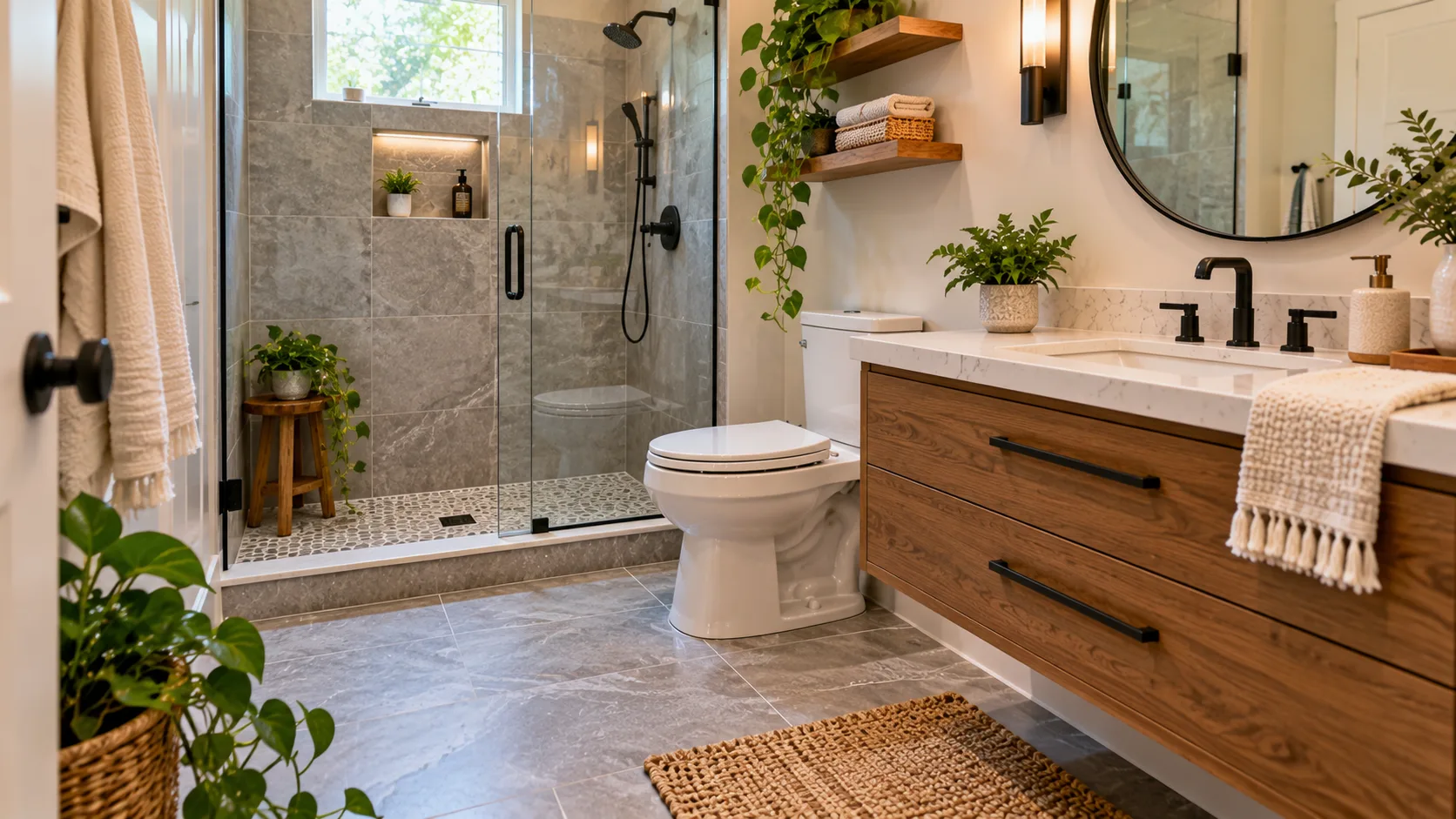
Choosing the best flooring for small bathrooms can make a significant difference in how the space looks, feels, and functions. Small bathrooms require flooring that handles daily moisture, frequent cleaning, and regular foot traffic without sacrificing style. The right material can also make a compact bathroom appear brighter, more spacious, and visually appealing while providing a comfortable surface for everyday use.
From porcelain and ceramic tiles to luxury vinyl and natural stone, homeowners have several practical flooring options to consider. Each material offers different advantages regarding durability, water resistance, maintenance, installation, and overall cost. This guide explains the best small bathroom flooring options, their benefits and limitations, and essential design tips to help you choose a beautiful and long-lasting floor.
Why Choosing the Right Flooring Matters in Small Bathrooms
Bathroom flooring plays an important role in protecting the space from moisture while supporting everyday comfort and safety. Unlike many other rooms, bathrooms experience regular water splashes, changing humidity levels, and frequent cleaning. Choosing suitable flooring materials helps reduce maintenance problems and supports the long-term performance of the entire bathroom.
In smaller bathrooms, flooring also has a strong influence on the room’s visual appearance. Because the available floor area is limited, color, texture, pattern, and tile arrangement can significantly affect how spacious the bathroom feels. A carefully selected flooring design can create visual continuity and complement existing walls, cabinets, fixtures, and decorative details.
The best flooring choice should balance appearance with durability, slip resistance, and practical maintenance requirements. A beautiful material may not be ideal if it becomes slippery when wet or requires complicated cleaning. Considering how the bathroom is used helps homeowners select flooring that remains attractive, comfortable, and functional over time.
Porcelain Tile Flooring for Small Bathrooms
Porcelain tile is one of the most popular bathroom flooring options because of its durability and low water absorption. It is manufactured from dense ceramic materials and fired at high temperatures to create a strong finished surface. Properly selected porcelain tiles can handle regular moisture exposure, making them suitable for busy bathrooms and compact spaces.
Porcelain tiles are available in numerous colors, patterns, sizes, and surface textures. Homeowners can choose designs that resemble marble, concrete, wood, or natural stone without accepting every maintenance requirement of those materials. Light-colored porcelain tiles can create a fresh appearance, while subtle patterns help add character without overwhelming a small bathroom.
Although porcelain is highly water-resistant, grout joints and the underlying installation still require appropriate moisture protection. Selecting floor-rated tiles with suitable slip resistance is especially important around showers and bathtubs. Professional installation may be worthwhile because careful substrate preparation and proper tile placement contribute significantly to long-term performance.
Ceramic Tile Flooring: An Affordable Bathroom Choice
Ceramic tile offers a practical combination of affordability, design flexibility, and easy maintenance. It is available in a wide selection of colors, shapes, and decorative finishes, making it suitable for many bathroom styles. For homeowners working with limited renovation budgets, ceramic flooring can provide an attractive alternative to higher-priced materials.
Glazed ceramic tiles generally offer good resistance to everyday splashes and surface staining. However, their water absorption and durability vary depending on the specific product and manufacturing process. Selecting ceramic tiles specifically rated for floor use helps ensure they can withstand normal bathroom traffic without unnecessary wear or damage.
Ceramic flooring also allows homeowners to experiment with creative patterns, including hexagonal shapes and traditional geometric designs. In small bathrooms, carefully chosen patterns can create visual interest without requiring extensive decorative accessories. Like porcelain, ceramic installations depend on appropriate grout, waterproofing where needed, and a stable subfloor to perform reliably.
Luxury Vinyl Plank Flooring for Small Bathrooms
Luxury vinyl plank flooring is a popular choice for homeowners who want an attractive bathroom floor without the appearance of traditional tile. Many products feature realistic wood-look patterns that create a warmer and more comfortable atmosphere. This makes luxury vinyl appealing for small bathrooms where natural wood would require additional moisture-related precautions.
Waterproof luxury vinyl products can resist surface water, although their joints and installation systems do not automatically waterproof the underlying floor. Homeowners should confirm that their chosen product is approved for bathroom installation. Properly sealed edges, suitable subfloor preparation, and adherence to manufacturer instructions are essential for reducing moisture-related problems.
Luxury vinyl planks are generally comfortable underfoot and relatively easy to maintain with appropriate cleaning methods. Their availability in different plank widths, colors, and textures provides flexibility for modern and traditional bathroom designs. Choosing lighter wood-look finishes can also help create a more open appearance in compact bathrooms.
Luxury Vinyl Tile Flooring for a Modern Look
Luxury vinyl tile offers another practical option for small bathroom flooring, particularly for homeowners who prefer stone or ceramic-inspired appearances. These products are designed to imitate materials such as marble, slate, and concrete. They can provide a decorative finish without the same installation requirements or weight associated with some traditional hard flooring materials.
Many luxury vinyl tile products offer good water resistance and comfortable surfaces for everyday use. However, water-resistant construction does not eliminate the need for proper installation and moisture management. Carefully preparing the subfloor and following product-specific installation requirements help maintain stability and reduce the possibility of water reaching vulnerable underlying materials.
Luxury vinyl tile is available in various shapes, patterns, and colors that suit compact bathroom layouts. Neutral stone-look designs can create a clean, modern atmosphere, while patterned options offer additional personality. Comparing product thickness, wear layers, warranties, and bathroom suitability can help homeowners identify an appropriate flooring choice.
Natural Stone Flooring for Elegant Small Bathrooms
Natural stone flooring can give small bathrooms a distinctive and sophisticated appearance through its unique colors, textures, and natural patterns. Popular options include marble, slate, travertine, and granite. Because every stone surface has individual characteristics, natural stone can create a personalized bathroom design that differs from manufactured flooring alternatives.
Despite its visual appeal, natural stone often requires more maintenance than porcelain or ceramic tile. Certain stones are porous and may need appropriate sealing to help manage staining and moisture exposure. Some polished stone surfaces also become slippery when wet, making finish selection and slip resistance important considerations for bathroom safety.
Natural stone flooring may involve higher material and installation expenses, especially when additional structural preparation is necessary. Homeowners should also consider cleaning requirements and the stone’s sensitivity to certain products. Choosing suitable finishes and maintaining the floor according to manufacturer recommendations can help preserve its appearance over time.
Sheet Vinyl Flooring for Budget-Friendly Bathrooms
Sheet vinyl is a practical option for homeowners who want affordable, moisture-resistant flooring in a small bathroom. Unlike individual planks or tiles, sheet vinyl can sometimes cover compact floors with few or no seams. Reducing seams may help limit potential pathways for surface water, although edges and penetrations still require appropriate installation details.
Modern sheet vinyl is available in numerous designs, including wood-look, stone-look, and decorative patterns. Some products provide cushioned surfaces that feel softer underfoot than traditional ceramic or porcelain tile. These qualities make sheet vinyl appealing for households that prioritize everyday comfort, straightforward cleaning, and controlled renovation expenses.
Successful sheet vinyl installation requires a smooth, stable, and properly prepared subfloor. Uneven surfaces may become visible through the flooring, while poorly sealed edges can create moisture problems. Homeowners should compare product quality, wear resistance, and manufacturer-approved installation methods before deciding whether sheet vinyl suits their bathroom.
Mosaic Tile Flooring for Small Bathroom Spaces
Mosaic tiles are small individual tiles commonly arranged in decorative sheets, making them popular for compact bathrooms and shower floors. They are available in porcelain, ceramic, glass, and selected natural stone materials. Their smaller dimensions allow designers to create detailed patterns while accommodating certain curved or sloped surfaces.
One advantage of mosaic flooring is the opportunity to introduce visual interest through texture, color, and geometry. Hexagonal mosaics, penny-round tiles, and simple square patterns can create distinctive bathroom designs. Additional grout joints may contribute to underfoot traction with some suitable tile systems, although actual slip resistance depends on the complete surface.
Mosaic floors usually require more grout maintenance than installations using larger tiles. Proper cleaning and suitable grout selection help keep the design looking attractive over time. When installing mosaics in wet areas, homeowners should select products specifically approved for the application and ensure appropriate waterproofing beneath the finished surface.
Waterproof Laminate Flooring: Is It Suitable for Bathrooms?
Waterproof laminate flooring has become an option for homeowners interested in wood-look bathroom designs. Some newer products include water-resistant cores, improved locking systems, and protective surface treatments. However, performance varies considerably, so homeowners should carefully distinguish between products described as water-resistant and those specifically approved for bathroom environments.
Traditional laminate flooring can experience swelling or damage when moisture reaches vulnerable edges or inner layers. Even products marketed as waterproof may have limitations regarding standing water, perimeter sealing, and installation locations. Reviewing manufacturer warranties and bathroom installation instructions is essential before choosing laminate for a moisture-prone space.
Where a suitable laminate product is approved, its decorative surface can provide an attractive alternative to natural wood. Nevertheless, bathrooms with frequent standing water or high moisture exposure may benefit from more established flooring options such as porcelain tile. Long-term performance should take priority over appearance when comparing laminate with other bathroom materials.
Best Flooring Colors to Make a Small Bathroom Look Bigger
Flooring color strongly influences how open or enclosed a small bathroom appears. Light shades such as warm white, soft beige, pale gray, and gentle cream can help reflect available light. These colors work particularly well when combined with coordinated wall finishes, suitable mirrors, and balanced lighting that create a consistent visual appearance.
Using similar tones on the floor and walls can reduce strong visual divisions within a compact bathroom. This approach may create an impression of continuity, especially when the room has limited natural light. However, slightly contrasting finishes can also work effectively when they complement the overall bathroom design without creating unnecessary visual clutter.
Dark flooring should not automatically be avoided in small bathrooms because it can provide depth and contrast. Charcoal, deep gray, and darker stone-look finishes may create a stylish appearance when balanced with lighter walls and sufficient illumination. The best color ultimately depends on personal preferences, existing fixtures, and the atmosphere homeowners want to achieve.
Best Tile Sizes and Patterns for Small Bathrooms
Tile size can influence both the visual design and installation requirements of a compact bathroom. Larger tiles may create a cleaner appearance by reducing the number of visible grout lines. This approach can work particularly well in modern bathrooms where simple finishes and uninterrupted surfaces are important design priorities.
Smaller tiles remain useful when homeowners want decorative patterns or need flooring that accommodates complex shapes and slopes. Hexagonal tiles, mosaics, and traditional geometric arrangements can create attractive focal points. However, busy patterns may become visually overwhelming when combined with heavily patterned walls, cabinets, and numerous accessories.
Tile layout also influences how the floor looks within the room. Straight arrangements provide a classic appearance, while diagonal and selected staggered layouts can introduce visual movement. Homeowners should consider tile dimensions, room proportions, cutting requirements, and installation complexity before choosing a pattern that balances appearance with practicality.
Best Slip-Resistant Flooring for Small Bathrooms
Bathroom slip resistance is an important consideration because floors frequently become wet during showers, bathing, and everyday cleaning. Smooth surfaces that look attractive in dry conditions may provide less traction when exposed to water. Selecting flooring specifically suitable for wet bathroom environments helps improve everyday safety without sacrificing the overall design.
Textured porcelain tiles, appropriate ceramic flooring, and certain slip-resistant vinyl products are among the available choices. However, not every textured or matte surface automatically provides adequate traction. Checking manufacturer slip-resistance information and selecting products intended for the relevant bathroom application offers a more reliable approach than judging appearance alone.
Good bathroom safety also involves keeping floors clean, addressing leaks promptly, and preventing unnecessary water accumulation. Securely positioned bath mats can provide additional comfort where appropriate, but they should not replace suitable flooring selection. Combining effective drainage, proper installation, and appropriate surface materials creates a more practical bathroom environment.
Which Bathroom Flooring Is Easiest to Clean?
Easy maintenance is an important consideration for small bathroom flooring, particularly in homes with frequent daily use. Porcelain and glazed ceramic tiles are popular because their surfaces generally resist common bathroom stains and can be cleaned with suitable products. However, grout joints still require periodic attention to maintain a fresh appearance.
Luxury vinyl and sheet vinyl are also relatively straightforward to maintain when homeowners follow manufacturer-approved cleaning instructions. Regular sweeping and gentle cleaning can help remove dust, hair, and everyday residue. Avoiding excessive water exposure at vulnerable edges and using suitable cleaning products can help protect the floor’s finish and underlying installation.
Natural stone often requires more specialized care because certain cleaners can damage sensitive surfaces. For example, acidic products may harm some marble and limestone finishes. Homeowners who prefer minimal maintenance should consider porcelain, ceramic, or suitable vinyl flooring while comparing the specific cleaning requirements of each product.
How Much Does Small Bathroom Flooring Cost?
The cost of small bathroom flooring depends on material selection, product quality, labor rates, and existing floor conditions. Budget-friendly sheet vinyl and selected ceramic tiles may have lower material costs than premium porcelain or natural stone. However, installation expenses can influence the total project cost as much as the flooring itself.
Small bathrooms sometimes involve complicated cutting around toilets, vanities, doorways, and plumbing fixtures. These details can increase labor requirements even when the total floor area is relatively limited. Removing old flooring, repairing the subfloor, and improving moisture protection may also add expenses that are not included in basic material prices.
To establish a realistic budget, calculate the floor area and allow additional material for cuts and waste. Request itemized installation estimates that include preparation, labor, accessories, and disposal where relevant. Comparing complete project costs rather than material prices alone helps homeowners make more informed flooring decisions.
Common Mistakes to Avoid When Choosing Bathroom Flooring
One common mistake is selecting flooring based entirely on appearance without considering water resistance or slip safety. Some attractive materials are unsuitable for frequent moisture exposure or require specialized care. Checking technical specifications, installation requirements, and product limitations before purchasing can help prevent avoidable maintenance problems and unnecessary replacement expenses.
Another mistake is overlooking the condition of the existing subfloor. Installing new flooring over moisture damage, uneven surfaces, or unstable materials may cause future problems regardless of the finished product’s quality. Proper preparation is essential, especially when bathroom fixtures, plumbing connections, and waterproofing details affect how the new floor performs.
Homeowners should also avoid choosing highly complicated designs without considering the small bathroom’s proportions. Excessive patterns, poorly coordinated colors, and unsuitable tile sizes can create an unbalanced appearance. Prioritizing durability, comfort, appropriate design, and realistic maintenance expectations helps achieve a bathroom floor that remains attractive and practical.
How to Choose the Best Flooring for Your Small Bathroom
The ideal bathroom flooring material depends on your household’s priorities, available budget, and preferred decorating style. Porcelain tile is worth considering for durability and water resistance, while ceramic tile offers numerous affordable design options. Luxury vinyl and sheet vinyl may appeal to homeowners who prioritize comfort, appearance, and relatively simple maintenance.
Consider how frequently the bathroom is used and whether it includes a bathtub, enclosed shower, or wet-room-style layout. Areas exposed to regular standing water require particularly careful attention to flooring compatibility and waterproofing. The presence of children, older household members, or mobility concerns may also influence surface texture and slip-resistance requirements.
Before making a final decision, compare samples in the actual bathroom under existing lighting conditions. Review product specifications, maintenance requirements, warranties, and installation recommendations to understand long-term performance. Choosing flooring that balances safety, moisture resistance, design, and affordability provides the strongest foundation for a successful small bathroom improvement.
Conclusion
Choosing the best flooring for small bathrooms involves balancing appearance, durability, safety, and moisture resistance. Porcelain and ceramic tiles remain reliable choices for many bathroom environments, while luxury vinyl and sheet vinyl offer practical alternatives. Natural stone and decorative mosaics can provide distinctive designs when homeowners are prepared for their specific installation and maintenance requirements.
The right flooring can also improve how spacious and comfortable a small bathroom feels. Light colors, coordinated finishes, suitable tile patterns, and appropriate surface textures help create an attractive design without compromising functionality. Considering cleaning requirements, installation conditions, and overall project costs makes it easier to choose a material that suits everyday household needs.
Whether you are planning a complete bathroom renovation or simply replacing an outdated floor, careful material selection can make a lasting difference. Focus on products approved for bathroom use and ensure that moisture protection and installation details receive proper attention. With thoughtful planning, a small bathroom can have beautiful, practical flooring that remains comfortable and appealing for years.
Frequently Asked Questions (FAQs)
What is the best flooring material for a small bathroom?
Porcelain tile is a strong option because of its durability, low water absorption, and wide design selection. Ceramic tile and bathroom-approved luxury vinyl also provide practical alternatives depending on budget and preferences.
What bathroom flooring makes a small space look bigger?
Light-colored flooring with simple patterns can help create a more open appearance. Large-format tiles, coordinated wall colors, and fewer visible grout lines may also make compact bathrooms feel visually spacious.
Is vinyl flooring suitable for small bathrooms?
Yes, bathroom-approved luxury vinyl and sheet vinyl can provide attractive, moisture-resistant flooring. Proper installation, sealed edges where required, and suitable subfloor preparation remain important for long-term performance.
Is porcelain or ceramic tile better for bathroom floors?
Porcelain generally has lower water absorption and can offer excellent durability, while ceramic tile may provide more affordable options. Both can work well when selected for floor use and installed correctly.
Can I install new bathroom flooring over old tiles?
Some flooring products allow installation over existing tiles when the surface meets manufacturer requirements. However, damaged tiles, moisture problems, uneven surfaces, or excessive floor height may require removal or additional preparation.


[…] Check whether cabinet doors close properly and drawers move smoothly. Minor hardware problems may be relatively easy to correct, while extensive water damage can require professional repairs. Addressing functional issues first creates a more reliable foundation for decorative improvements. […]